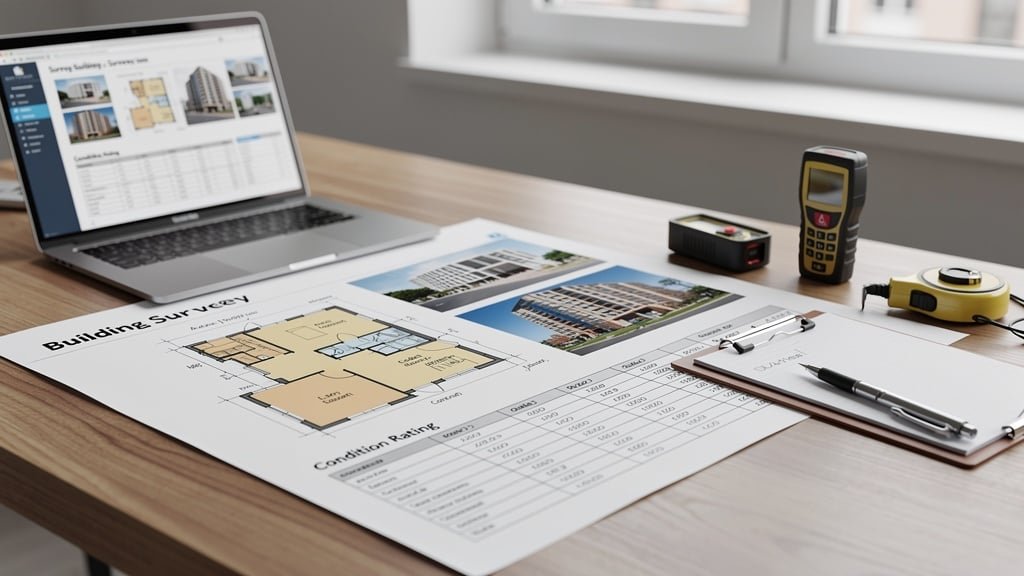
Glasgow Surveyors get asked this question constantly: "What's the difference between a home report and a building survey?" It's a crucial question because choosing the wrong survey type can mean missing serious property defects or paying for unnecessary detail.
As chartered building surveyors working across Scotland, we've conducted thousands of both survey types. This guide explains exactly what each survey involves, how they differ, and which one you need for your property purchase.
Understanding Home Reports in Scotland
Home reports are mandatory in Scotland for property sales. The seller commissions and pays for the report before marketing the property. All potential buyers can review the same home report, creating transparency in the Scottish property market.
What's Included in a Home Report?
A home report contains three sections:
- Single Survey: A property inspection conducted by a chartered surveyor, rating the condition of various elements using a traffic-light system (green, amber, red)
- Property Questionnaire: Information from the seller about repairs, alterations, and known issues
- Energy Performance Certificate (EPC): The property's energy efficiency rating and improvement recommendations from qualified energy assessors
Our RICS registered valuers conduct home reports to professional standards, examining the property's structure, services, and overall condition. The report includes a market valuation which helps buyers and lenders assess property value.
Limitations of Home Reports
While home reports provide valuable information, they have limitations:
- Non-invasive inspection only - surveyors don't lift floorboards or move furniture
- Standard format may lack detail on specific concerns
- Focus on condition rather than detailed defect analysis
- May recommend further investigation without providing it
For many residential properties, especially modern homes in good condition, the home report provides sufficient information. But for older or more complex properties, additional inspection often makes sense.
What is a Building Survey?
A building survey (formerly called a full structural survey) is the most comprehensive property inspection available. It's commissioned by the buyer and provides detailed analysis of the property's condition.
What Building Surveys Cover
Our building surveyors provide:
- Comprehensive Inspection: Detailed examination of all accessible areas
- Defect Analysis: Identification and explanation of all defects found
- Repair Guidance: Advice on necessary repairs, urgency, and approximate costs
- Maintenance Advice: Recommendations for ongoing property care
- Technical Detail: In-depth explanations of construction methods and materials
- Future Considerations: Potential issues that may develop
Building surveys take longer (typically 3-5 hours for an average property) and result in much more detailed reports than home reports. Our chartered building surveyors examine properties thoroughly, accessing roof spaces, inspecting foundations where visible, and using specialist equipment like damp meters.
Key Differences Between Survey Types
| Aspect | Home Report | Building Survey |
|---|---|---|
| Who Commissions | Seller | Buyer |
| Detail Level | Standard format, moderate detail | Comprehensive, highly detailed |
| Typical Cost | £300-£600 | £500-£1,500+ |
| Inspection Time | 2-3 hours | 3-5 hours |
| Best For | Modern properties in good condition | Older properties, complex buildings, detailed analysis needed |
When You Need Both
In Scotland's system, you'll receive the home report automatically. The question is whether you need an additional building survey. Our property consultants recommend considering a building survey if:
- The property was built before 1970
- It's Victorian, Georgian, or other period construction
- The home report shows multiple amber or any red ratings
- You're planning major renovation
- It's unusual construction (timber frame, concrete, thatched, etc.)
- There are visible signs of movement, damp, or structural issues
- It's a significant investment and you want maximum information
The home report and building survey complement each other - the home report provides baseline information, while the building survey offers deeper analysis and buyer-specific advice.
Making Your Decision
Consider these factors when deciding whether to commission a building survey:
Property Age and Type: Older properties benefit most from detailed building surveys. Modern properties in good condition may not need additional inspection beyond the home report.
Your Budget: While building surveys cost more, they can save you thousands by identifying serious issues before purchase. Consider it insurance for your investment.
Home Report Findings: If the home report raises concerns, a building survey provides the detailed investigation those concerns deserve.
Your Risk Tolerance: Some buyers want maximum information before committing. Others accept the home report provides sufficient detail. Know your own comfort level.
Future Plans: If you're planning extensive renovation, a building survey helps you understand what you're working with before you start.
Questions to Ask Surveyors
When discussing survey options with our Glasgow surveyors or any RICS qualified professionals, ask:
- "Based on this property, do you recommend just the home report or an additional building survey?"
- "What additional information would a building survey provide for this specific property?"
- "Are there any concerns in the home report that warrant further investigation?"
- "What would the building survey include that the home report doesn't?"
- "Can you provide a quote for both options?"
Good surveyors will give honest advice about what you need, not just sell you the most expensive option.
Final Thoughts
The choice between relying on a home report or commissioning a building survey depends on your property, your circumstances, and your peace of mind requirements. There's no single right answer for everyone.
As surveyors in Glasgow serving buyers across Scotland, we've seen both approaches work well. We've also seen buyers regret not getting additional surveys when problems emerge after purchase.
Our advice? If you're unsure, discuss your specific property with a chartered building surveyor. They can review the home report, consider the property type, and recommend the level of inspection that makes sense for your situation.
Need Survey Advice?
Our team of RICS registered surveyors can review home reports and advise whether additional surveys would benefit your purchase. Get expert, objective guidance from Glasgow's trusted property consultants.